


Connect Golden Gate sandstone landscapes with a northern Drakensberg stay, allowing separate full days, the correct entrances and current access checks.
A Kaapsehoop Day Trip for Heritage and Escarpment Scenery
Posted on Mon November 2, 2026.
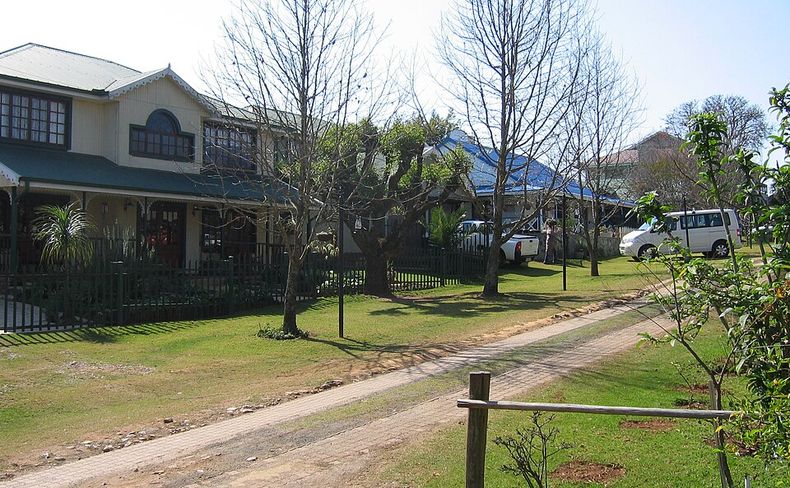
Build a Kaapsehoop outing around village history, a chosen guided walk and escarpment scenery, with realistic expectations for access, mist and wild horses.
A Kaapsehoop day trip can give a Lowveld holiday a different scale: village streets, the traces of a gold-rush settlement and sandstone scenery on the Mpumalanga escarpment. Rather than trying to fit every advertised adventure into one day, choose a heritage walk as the anchor and add a landscape outing only if conditions and access allow.
The rewarding question is what survives, what has disappeared and how the mountain shaped the settlement. A good visit makes those distinctions visible. It also leaves room for mist, a slower lunch or a conversation with a local guide, instead of relying on a guaranteed view or horse sighting.
Featured photograph: Kantoor Street in Kaapsehoop, August 2008. John A Forbes at English Wikipedia, Wikimedia Commons, CC BY-SA 3.0. Resized and cropped for the featured format, shared under the same licence. Archival streetscape, not a current business or building-access record.
Make the village walk the centre of the day
Discover Kaapsehoop publishes an 18-stop self-guided heritage trail, with an indicative duration of 45 to 60 minutes. Its stops include the Commissioner's House, government precinct, postal history, stores, trades and Nel Cottage. The point is to understand how a settlement worked, rather than simply photograph old buildings.
Read the trail before you arrive and choose a few themes that interest you. Government and communications make one thread; shops, blacksmiths and service yards make another. The trail warns of weak mobile reception and offers a way to load its material in advance. Open and test what you need while connected, rather than discovering at the first stop that your phone has not saved it.
Keep an important distinction in mind: a numbered historical site does not necessarily mean an original building remains, or that its interior is open. Some stops interpret vanished places. Check access locally, respect occupied properties and use the trail's archival material to read what the modern street alone cannot show.
Choose a guide for interpretation, not a longer checklist
The current Discover Kaapsehoop tour page, checked on 2 November 2026, offers a Historical Heritage Tour of about 90 minutes. Its description distinguishes surviving structures from places brought back into the story through historical photographs. Ask how much of the outing is outdoors and whether any interior entry is included before making assumptions about a museum visit.
The same provider offers a separate geology hike among sandstone formations, also listed at about 90 minutes. These are different experiences. If you prefer history and village life, book the heritage tour. If the shapes of the escarpment are your main interest, ask about the geology outing and the route conditions. Doing both is a choice, rather than a requirement for seeing Kaapsehoop properly.
The provider's contact page asks for at least 24 hours' notice for experiences. Send your intended date, group size and any access requirements, then wait for confirmation of the meeting point, quote and arrangements. A website listing is useful planning evidence; it does not reserve a guide or establish availability for your party.
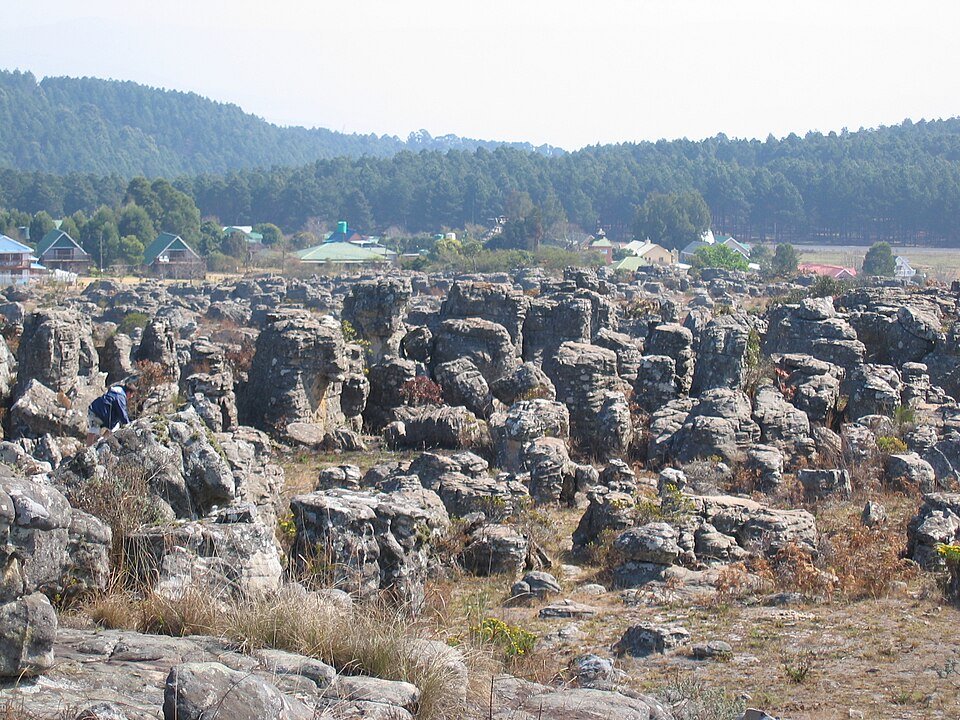
Weathered sandstone formations above Kaapsehoop, with the village and Berlin pine plantations in the background, August 2008. John A Forbes at English Wikipedia, Wikimedia Commons, CC BY-SA 3.0, unmodified web reproduction. The photograph illustrates the landscape, not a marked route or current permission to enter.
Let the rocks add another layer to the story
Kaapsehoop's local geological interpretation connects the sandstone formations and escarpment to the settlement's history. You do not need to turn a holiday outing into a geology examination. Ask a guide why some forms stand proud, how weathering shaped them and how the physical landscape affected where people travelled and settled.
That focus keeps the outing distinct from a Barberton Makhonjwa Geotrail day. Here the village and its immediate escarpment are the subject. Avoid combining several separate regional geological attractions merely because they look close on a map.
For any landscape extension, use the local viewpoint information as a starting point for enquiries. It warns that some access routes require permits and that mist can reduce visibility. Ask about a recognised route appropriate to the day's arrangements. Do not improvise a shortcut, enter old workings or scramble onto formations to recreate a photograph.
Keep horses and weather outside the timetable
The free-roaming horses are part of Kaapsehoop's identity, but they are not a scheduled display. Discover Kaapsehoop's viewing guidance asks visitors to keep their distance, use a zoom lens and avoid crowding the animals. If they are beside a road, give them space rather than treating the encounter as a reason to stop unpredictably.
The horses' origins are uncertain. The local guide explicitly distinguishes familiar cavalry stories from conclusive historical evidence. Enjoy the animals without turning an appealing explanation into established fact. If you do not see them, the village walk still has a purpose and the day does not depend on chasing a herd.
The local weather guide describes an escarpment climate with rapid changes, mist and summer rainfall. Pack a layer even when the Lowveld feels warm, and check the forecast before leaving. If visibility deteriorates, a shorter village visit can be a sensible choice. A guide should confirm whether a booked landscape outing will proceed and what the alternative or cancellation arrangement is.
Plan a complete outing without overfilling it
One workable outline is to arrive with the trail material loaded, spend the first part of the visit on village interpretation and leave a generous lunch break. Add one confirmed guided experience or recognised viewpoint outing, rather than assuming there is time for several activities. This is an editorial planning suggestion, with the order adjusted to your confirmed booking and the weather.
If you are continuing to Kruger, protect the time needed for that journey and your actual gate arrangements. A detour should improve the holiday, rather than put the next stage under pressure. An overnight stay in the area is a separate decision when an afternoon visit feels too compressed.
For a separate Cape Peninsula stage of your South African holiday, check Aqua Terra's Simon's Town availability. Aqua Terra welcomes guests aged 12 and older. Allow for travel between regions when combining the mountain village with a coastal stay.
Research and editorial review: Aqua Terra, 2 November 2026. Confirm current guide availability, route access and visitor arrangements directly before travelling.
Further Reading
Golden Gate and Drakensberg: Planning a Two-Base Trip
Tue November 3, 2026
Read This Article
Basotho Cultural Village: Planning a Guided Visit
Tue November 3, 2026
Read This Article
Plan a Basotho Cultural Village museum visit with a guide, distinguish specialist trails from the rest camp, and confirm the programme for your date.
Clarens Rafting Holiday: Planning an Ash River Outing
Tue November 3, 2026
Read This Article
Fit a guided Ash River outing into a Clarens weekend, comparing half-day and full-day packages, transfers, participant requirements and current operation.



Share This Post