


Connect Golden Gate sandstone landscapes with a northern Drakensberg stay, allowing separate full days, the correct entrances and current access checks.
Basotho Cultural Village: Planning a Guided Visit
Posted on Tue November 3, 2026.
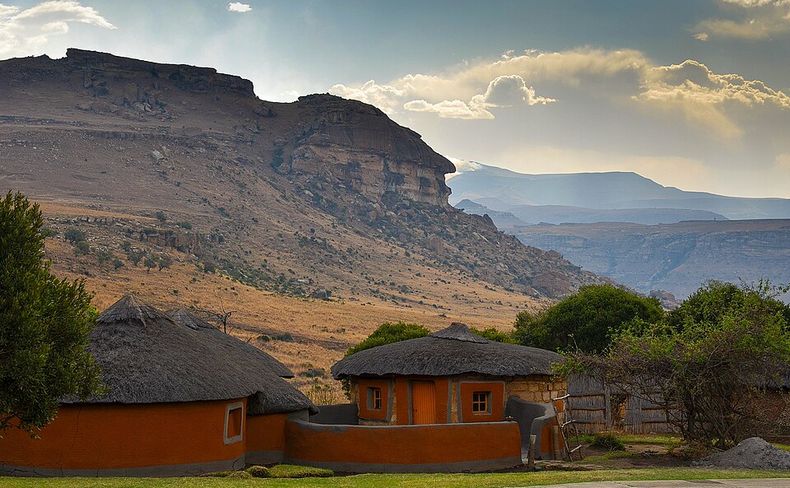
Plan a Basotho Cultural Village museum visit with a guide, distinguish specialist trails from the rest camp, and confirm the programme for your date.
Visit the Basotho Cultural Village for guided heritage interpretation, and book the experience you actually want before setting off. The open-air museum in Golden Gate Highlands National Park explores changes in Basotho architecture and household life. A museum tour, a specialist cultural route and an overnight rest-camp reservation are separate choices.
For travellers wondering whether it deserves a place in a Golden Gate itinerary, the deciding factor is interest in the explanation behind the buildings and objects. Allow time for the guide and questions, rather than treating the village as a quick photograph between mountain viewpoints.
By Aqua Terra. Researched 2 November and checked 3 November 2026.
Featured photograph: reconstructed homesteads at Basotho Cultural Village, 16 October 2014, by Pavel Špindler, via Wikimedia Commons, CC BY 3.0. Archival setting photograph; resized and cropped for the featured format. It does not establish today's facilities or programme.
Understand what the village represents
The Free State provincial museums department identifies Basotho Cultural Village as an open-air museum within Golden Gate, near Phuthaditjhaba. Its official account explains that the reconstructed homesteads represent different periods, from the sixteenth century onwards. Construction of the museum began in 1991 and it officially opened in October 1994.
That chronology matters. You are visiting a deliberately interpreted heritage setting, rather than a cross-section of how every Basotho person lives today. Buildings, clothing and demonstrations belong to particular contexts. Ask the guide which period a reconstruction depicts, what evidence informs it and how the practice has changed. This gives the visit more depth than searching for a single supposedly timeless way of life.
The village is in South Africa's Free State. Thaba Bosiu Cultural Village in Lesotho is a different destination. Check the full attraction name and location when reserving, especially if an itinerary already includes a Lesotho visit.
Choose the museum tour or a specialist programme
The SANParks activity page describes three distinct experiences. Its museum tour focuses on architecture and everyday life and is listed at approximately 45 minutes, seven days a week. Treat that as a published description to confirm with the venue, rather than an assurance that a guide will start whenever you arrive.
The longer Cultural Route is described as a historical-site programme in Qwaqwa, listed at seven hours on Tuesdays, Wednesdays and Thursdays. It needs its own day allocation. It is not simply the museum tour with a few extra minutes attached.
The Herbal Trail is listed separately as a two-hour guided outing on those same weekdays, with traditional plant interpretation and a guided continuation towards San rock art. Confirm the actual route, staffing and access before booking around it. Cultural discussion of plant use is not medical advice or a reason to try remedies; ask a qualified clinician about health decisions.
These published programmes are not interchangeable. If your main interest is historical architecture, request the museum tour by name. If it is Qwaqwa history or a specialist guided trail, ask whether that particular programme is operating on your date and what arrangements apply.
Make the guided visit a conversation
The provincial account describes huts arranged to show change over time, with objects connected to each setting. Start with the relationship between a house's form and its everyday use. Ask how building materials were selected, which spaces served which purposes and how a household's organisation affected the layout.
Where decorative work is discussed, ask about the makers and meaning rather than assuming a pattern has one universal explanation. South African Tourism identifies litema among the cultural forms represented at the village. A guide can explain what the specific examples illustrate and which distinctions matter locally.
Before photographing a person, performance, object or interior, ask the guide what permission is required. Participation in a demonstration should be voluntary. You can show interest through listening and questions without accepting food, drink or any personal activity you would rather decline. If an item is offered for sale, ask who made it and what the price includes.
A useful question to end the tour is what the guide recommends reading or visiting next. It lets the people interpreting the collection help shape your understanding beyond the museum's selected scenes.
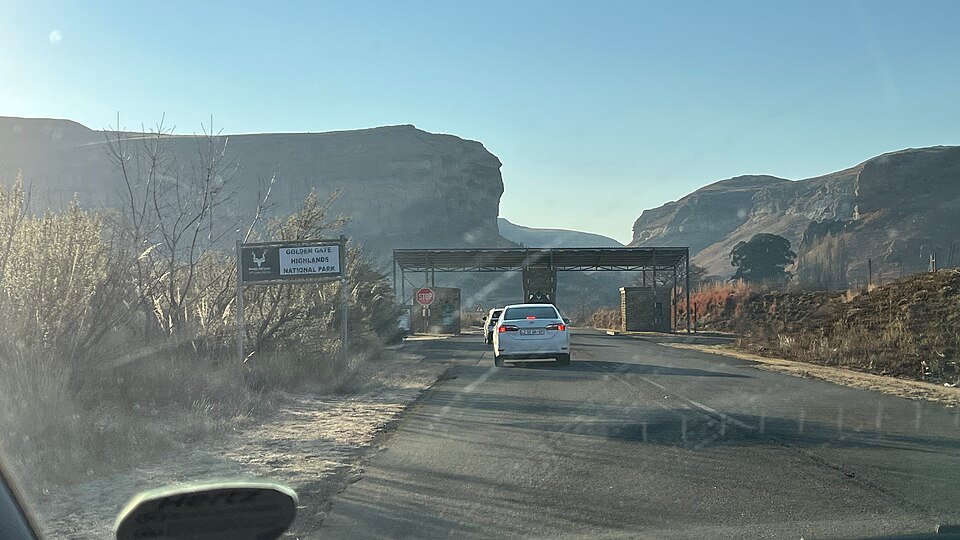
A Golden Gate park entrance below the mountains, 31 July 2025, by Slippery slope302, via Wikimedia Commons, CC BY 4.0. Archival regional context, not the museum entrance or evidence of current access arrangements.
Reserve a time block, not a guaranteed performance
For an ordinary museum visit, keep a half-day block available for travel, reception, a confirmed tour and discussion. This is a planning allowance, not the venue's advertised tour duration. A traveller's old account of seeing a dance competition does not mean a performance takes place every day. The provincial government has publicised particular cultural competitions in past years; those dated events cannot establish a current programme.
Ask whether your requested language can be accommodated, how groups are organised and when the final tour begins. Confirm current charges, payment methods and any separate park reporting or conservation requirements. Published price lists and third-party opening times may be old even when the webpage remains online.
If walking distances, steps, seating or toilet access affect your visit, describe the specific need when booking. An open-air museum label does not establish that every surface or reconstructed building is accessible. Ask what can be included comfortably without promising full access on the venue's behalf.
Keep meals and accommodation as separate bookings
SANParks also uses the Basotho Cultural Village name for a rest camp. An overnight booking should not be assumed to include a guided museum visit, a meal or a cultural performance. Conversely, a museum booking does not provide access to accommodation facilities. Ask for separate written details of what you are purchasing.
Confirm any food service or tasting before relying on it for lunch, including dietary requirements. A historical guide's restaurant description is not evidence that a kitchen will be serving on your date. Carry the visit's agreed arrangements into the rest of your day's meal planning.
Base the wider stay on your priorities. Clarens suits a village-focused break; park accommodation may suit a landscape-focused stay. Our first Clarens weekend guide helps with that broader choice. Keep the cultural visit's confirmed start time as an anchor and add only the Golden Gate stops that fit around it.
For a separate Cape Peninsula stage later in your South African holiday, Aqua Terra in Simon's Town welcomes guests aged 12 and older. Check Aqua Terra availability for those dates.
Further Reading
Golden Gate and Drakensberg: Planning a Two-Base Trip
Tue November 3, 2026
Read This Article
Clarens Rafting Holiday: Planning an Ash River Outing
Tue November 3, 2026
Read This Article
Fit a guided Ash River outing into a Clarens weekend, comparing half-day and full-day packages, transfers, participant requirements and current operation.
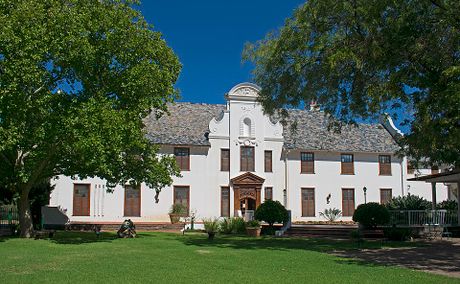
Art, Sculpture and Garden Time at Oliewenhuis
Tue November 3, 2026
Read This Article
Plan a Bloemfontein art outing with Oliewenhuis galleries, outdoor sculpture and garden time, using the museum-specific address, hours and current exhibitions.



Share This Post