


Connect Golden Gate sandstone landscapes with a northern Drakensberg stay, allowing separate full days, the correct entrances and current access checks.
Barberton's Mining History and Ancient Mountain Story
Posted on Mon November 2, 2026.
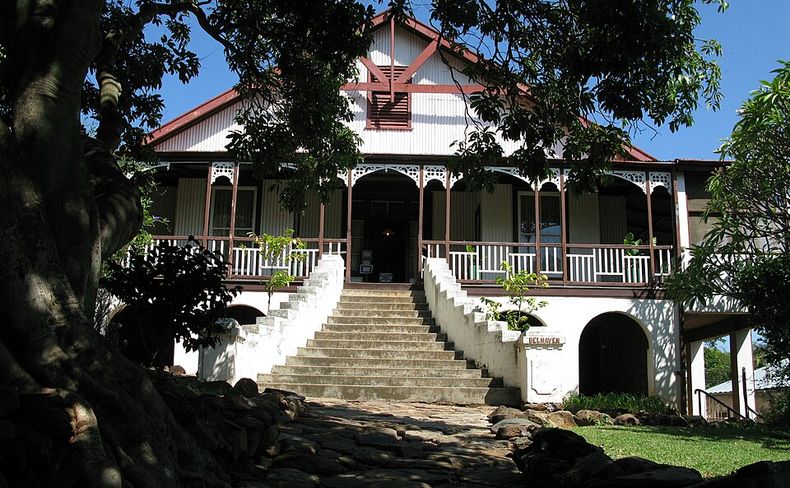
Connect Barberton museum and house-museum history with the Makhonjwa Geotrail, while choosing time for interpretation and confirming current visitor access.
Barberton offers two very different ways to look into the past. Its town museums and heritage buildings explain a gold-mining community and the people who shaped it. The surrounding Makhonjwa Mountains preserve rocks that record conditions on the early Earth, billions of years before that mining history began.
A rewarding visit keeps those timescales distinct, then connects them through the landscape. Start by deciding whether geology or town history is your main interest. You can investigate both, but the mountain drive deserves more time than a quick detour between museum rooms.
Featured photograph: Belhaven House Museum in Barberton, photographed 28 April 2012 by Atoom. Wikimedia Commons source, CC BY-SA 3.0. Resized and cropped for featured display; the displayed version retains that licence. Archival exterior, not confirmation of present-day interior access.
Why the mountains matter beyond gold
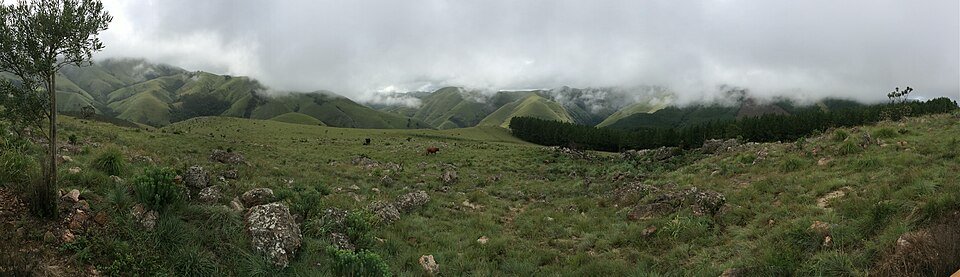
UNESCO inscribed the Barberton Makhonjwa Mountains in 2018. The property preserves volcanic and sedimentary rocks dating from about 3.6 to 3.25 billion years ago. Their importance lies in the evidence they retain about early surface conditions, volcanism, impacts and the environments associated with early life.
This is not a claim that every mountain here is the oldest rock on Earth, or that a visitor can recognise an early-life trace without interpretation. The record becomes meaningful when different sites are considered together. A guide or a well-explained panel helps turn an unfamiliar rock surface into a question about how that ancient environment worked.
Look for the distinction between an observation and its interpretation. What feature is visible? What process does it record? Why do scientists connect that feature with a particular environment? You do not need a geology qualification to ask those questions, and they give a visit more purpose than simply photographing a plaque.
Give the Geotrail a proper time allowance
The Mpumalanga Tourism and Parks Agency describes the Geotrail as a road-based route along the R40 from Barberton towards the Josefsdal border area. It lists interpretation stops and a suggested outing of roughly five hours. That is time for stopping and reading, not a promise of a fixed driving duration.
Mountainlands' route information similarly describes landscaped lay-bys, viewpoints and explanatory panels, with a guidebook available through local tourism information. These are the visitor facilities to enquire about. World Heritage status does not grant entry to every outcrop, property or mining area in the surrounding mountains.
Ask local tourism information about the current road, individual stops and any closures before departure. Historical reports describe flood damage on this road; they do not establish its condition for your dates. Neither a working map route nor a current border-hours listing proves that every Geotrail stop is accessible.
If your holiday continues into Eswatini, plan that crossing separately. If it does not, specify a South African return outing when arranging a guide. Do not let an itinerary described as a border road turn into an accidental assumption about an international journey.
Start the town story at Barberton Museum
The provincial museum website identifies the Main Museum at 36 Pilgrim Street. Its displays cover geology, Stone Age and Iron Age material, mining, military history, Victorian life and emaSwati cultural history. That range is useful: Barberton's story extends beyond gold finds and successful prospectors.
At this review, the page publishes 09:00 to 16:00 opening on weekdays and weekends, including public holidays. Confirm access for your date and which associated buildings can be visited. The site distinguishes free Main Museum entry from charges at certain house museums; ask for the current arrangement rather than assuming one admission covers everything.
Use the displays to develop questions for the rest of the day. How did mining change the town's work and trade? Whose experiences appear in the exhibits? How does the local geological record connect with the material that drew people here much later? An interpreted visit can help you explore those connections without treating a gold-rush story as the whole regional history.
Choose a house museum for a closer look
Belhaven House's official description records a prefabricated house built in 1904, with pressed-iron walls and ceilings. Its interpretation concerns upper-middle-class life in the late Victorian and early Edwardian periods. It offers a specific domestic perspective, rather than a representative home for everyone living in Barberton.
Ask which rooms and features are accessible on the day. Looking at imported building materials, household arrangements and decorative choices can make the economic story tangible. It also invites a useful question: what kind of wealth and lifestyle does this particular house preserve, and whose homes have not survived as museums?
Use the heritage walk to connect the buildings
The tourism agency's account of the Heritage Walk describes a town route connecting gold-rush-era landmarks, including the De Kaap Stock Exchange frontage. It explains why a guide can add context beyond identifying buildings. The account is historical, so obtain the current route information and building-access details locally.
Decide whether you want an orientation walk or time inside one or two buildings. Those are different plans. A frontage can be part of a public-street walk while the building behind it has separate access arrangements. Ask about the walking distance, terrain and available pauses if anyone in your party needs them.
Keep mining heritage within authorised visitor experiences
If gold panning or a mine-related tour is a priority, enquire specifically about an operating, authorised visitor experience and what it includes. A museum mining display, a demonstration and underground access are separate activities. An old itinerary or a visible mine entrance is not an invitation to investigate independently.
For a short stay, choose the museum and a focused town walk, or make the Geotrail your main day. With more time, give the mountain outing and town interpretation separate spaces. That leaves room to understand both the ancient rocks and the much more recent choices people made around them.
Adding a separate Cape Peninsula stage to your South African journey? Check Aqua Terra availability in Simon's Town for that coastal stay. Aqua Terra welcomes guests aged 12 and older.
Research and editorial review: Aqua Terra, 2 November 2026. Reconfirm museum access, guiding, current road conditions and permitted Geotrail stops before travelling.
Further Reading
Golden Gate and Drakensberg: Planning a Two-Base Trip
Tue November 3, 2026
Read This Article
Basotho Cultural Village: Planning a Guided Visit
Tue November 3, 2026
Read This Article
Plan a Basotho Cultural Village museum visit with a guide, distinguish specialist trails from the rest camp, and confirm the programme for your date.
Clarens Rafting Holiday: Planning an Ash River Outing
Tue November 3, 2026
Read This Article
Fit a guided Ash River outing into a Clarens weekend, comparing half-day and full-day packages, transfers, participant requirements and current operation.



Share This Post