


Connect Golden Gate sandstone landscapes with a northern Drakensberg stay, allowing separate full days, the correct entrances and current access checks.
South African Jewish Museum: Heritage and Miniatures
Posted on Tue November 3, 2026.
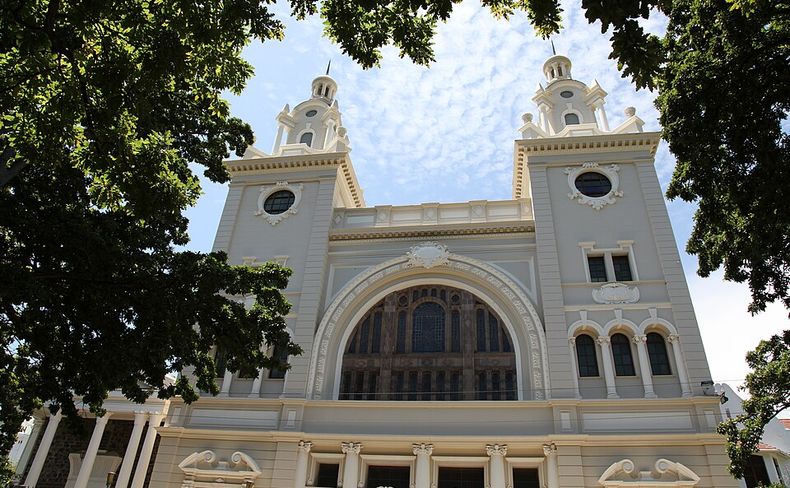
Make time for South African Jewish heritage and the Isaac Kaplan netsuke collection, with practical guidance on visits, guides, photo ID and campus distinctions.
The South African Jewish Museum in Gardens offers a focused Cape Town museum outing with two very different strands: the history of Jewish life in South Africa and a collection of miniature Japanese carvings. Give both some attention. The contrast makes this more than a quick stop to photograph a historic building.
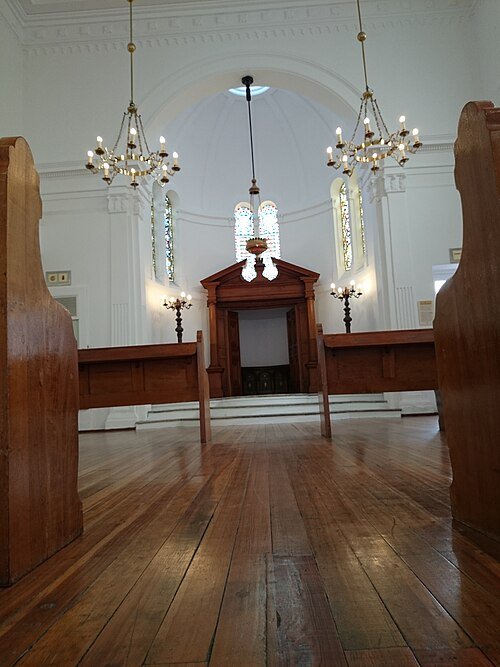
The Great Synagogue in the lead photo is next door. Start your museum visit at the Old Shul, shown below, and leave time for the netsuke cases if you enjoy looking closely at objects.
Begin with the Old Shul and the museum's story
The museum's own history explains that an earlier collection occupied the Old Shul, built in 1863. The later museum expanded the story into a purpose-built extension and opened in December 2000, with Nelson Mandela present. The older synagogue and the newer museum are connected parts of the visitor experience, rather than two names for the neighbouring Great Synagogue.
Approach the displays through people and places. Look for where families came from, what they brought, how they established businesses and institutions, and how their lives became part of South African society. A migration story becomes more tangible when linked to a household object, photograph or personal account.
The museum's introduction describes interactive and audiovisual displays, artefacts and a life-sized recreation of a shtetl, a small Eastern European Jewish town. Use the setting as a prompt for questions about everyday life and change, rather than treating a reconstruction as the complete experience of every family represented.
Leave room for the netsuke collection
The museum's netsuke page describes around two hundred pieces from Isaac Kaplan's collection, dating from the seventeenth to nineteenth centuries. These small Japanese carvings and associated objects form a different visual experience from the South African historical displays. The museum lists materials including wood, ivory and staghorn, as well as ceremonial pipes and sword fittings.
This is a collection for close observation. Choose a few objects rather than trying to register every case at the same speed. Notice the scale, carving, surface and expression, then use the interpretation to understand the object's purpose and context. Something small enough to overlook on the first pass can reward a much slower second look.
The provider advertises touchscreens and audio guidance for the collection. Ask which interpretation tools are available on your visit and how to use them. If this exhibition is your main reason for coming, confirm its access before travel rather than relying only on a visitor's old description.
Choose an independent visit or a booked guide
The museum FAQ says ordinary visits do not need an appointment, while private tours should be arranged. Independent visitors can spend their time according to their interests during opening hours. A guided visit is useful if you want to ask about particular historical themes or connect several displays into a clearer narrative.
The guided-tour page lists R500 per private guide, plus museum admission, with tours lasting approximately an hour during opening times. Guide availability and payment confirmation apply. A director's tour is a separate product and should not be assumed to come with a standard guide booking.
Tell the museum what interests you when enquiring: family history, migration, religious objects, South African community life or the miniature collection. Ask whether your preferred focus can be included and leave independent viewing time afterward. A one-hour guided introduction need not dictate the entire length of your visit.
Check the calendar and bring photo identification
The official visiting calendar, rechecked on 3 November 2026, lists Sunday to Thursday opening from 10:00 to 17:00 and Friday from 10:00 to 14:00, with Saturdays closed. The posted Jewish holiday schedule currently covers 2027. Confirm holiday arrangements for dates outside that schedule.
The museum requires valid photo identification. Put that beside your ticket or booking reference before leaving your accommodation. The page lists a general last entry of 16:30. For Friday, when the museum closes at 14:00, confirm the applicable last entry time and allow enough time for the displays.
The current admission page lists standard adult entry at R300, a South African resident adult rate of R150 and a resident senior rate of R75. Student concessions have their own conditions. Confirm eligibility and accepted documentation directly. A private-guide fee is additional, not a replacement for each person's entrance ticket.
Understand the campus before adding another visit
The museum gives its address as 88 Hatfield Street, Gardens. Use the current arrival instructions for the visitor entrance, parking or drop-off. Ask about the complete access route, seating and any individual requirements rather than making assumptions from an exterior photograph.
The campus description identifies the Cape Town Holocaust & Genocide Centre, Gardens Shul, Café Riteve and the Jacob Gitlin Library alongside the museum. These are separate organisations or facilities. Their presence on one campus does not establish shared hours, unrestricted entry or a combined admission ticket.
If you want to include another institution, verify its arrangements separately and allow time for its subject matter. Keep a café stop flexible until its service is confirmed. The museum's FAQ says the Old Shul is deconsecrated; do not extend its visitor arrangements to an active neighbouring place of worship.
Keep the rest of the day manageable
A museum morning with time for lunch and a modest nearby activity can be more satisfying than a succession of rushed admissions. If you want a broader comparison of the city's major institutions, use our Cape Town museums guide; this visit's distinctive focus is Jewish South African heritage and the netsuke collection.
For a separate Cape Peninsula stay, check Aqua Terra availability in Simon's Town. Aqua Terra welcomes guests aged 12 and older. Plan the journey to Gardens and the museum's opening day as part of your city outing.
Researched by Aqua Terra on 2 November 2026. Museum information and copy rechecked on 3 November 2026. Check current admission, holiday closures, identification requirements and any additional campus visits directly.
Image credits: featured the neighbouring Great Synagogue by Raymond Ellis, Wikimedia Commons, 6 December 2011, CC0 1.0, resized and cropped for the page. Body Old Shul interior at the South African Jewish Museum by Nkansahrexford, Wikimedia Commons, 21 July 2014, CC BY-SA 4.0, source display size. Both photographs are archival.
Further Reading

Golden Gate and Drakensberg: Planning a Two-Base Trip
Tue November 3, 2026
Read This Article

Basotho Cultural Village: Planning a Guided Visit
Tue November 3, 2026
Read This Article
Plan a Basotho Cultural Village museum visit with a guide, distinguish specialist trails from the rest camp, and confirm the programme for your date.

Clarens Rafting Holiday: Planning an Ash River Outing
Tue November 3, 2026
Read This Article
Fit a guided Ash River outing into a Clarens weekend, comparing half-day and full-day packages, transfers, participant requirements and current operation.



Share This Post