


Connect Golden Gate sandstone landscapes with a northern Drakensberg stay, allowing separate full days, the correct entrances and current access checks.
Alpaca Loom Family Visit: Tours, Fibre and Animal Care
Posted on Tue November 3, 2026.
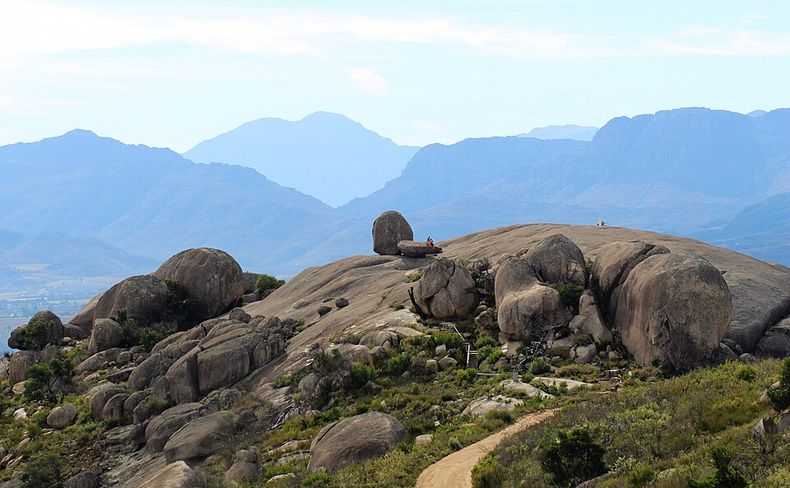
Compare the Alpaca Loom barn tour, guided walk and weaving-studio visit near Paarl, with practical family planning and a clear distinction between advertised care and independent welfare approval.
For a family visit to the Alpaca Loom near Paarl, first choose between a barn tour, a guided alpaca walk and time in the weaving studio. These are different experiences. A sensible outing leaves room for questions, respects the animals' space and does not depend on every child wanting to touch or lead an alpaca.
This is a working fibre and breeding farm with visitor activities. Its own information can explain what is offered, but an attractive photograph or a family-friendly description does not establish an independent animal-welfare assessment. Decide what kind of visit you are comfortable supporting before making the journey.
Featured photograph: view from Paarl Mountain, Karen Pagel, May 2018, Wikimedia Commons, CC BY-SA 4.0. Resized and cropped. Regional context only, not a photograph taken at the Alpaca Loom.
Make the farm the purpose of the outing
The Alpaca Loom's own site places it on Suid Agter Paarl Road in southern Paarl. It lists a coffee shop, weaving studio, animal-viewing and interaction options, alongside its alpaca farming activities. Plan for the actual farm address rather than treating Paarl as a Cape Town neighbourhood.
For a family whose interests extend beyond wine tasting, that offers a particular theme: connecting an animal to the fibre and finished textiles produced from it. There is no need to turn the day into a circuit of several animal venues or wine farms. A visit with enough time to listen can be more useful than a series of quick photo stops.
Ask for the current entrance instructions and arrange the return journey as well as the trip out. Confirm transport capacity for everyone travelling. Do not assume an activity admission ticket includes collection from Cape Town or Simon's Town.
Barn tour or walk: choose the experience you want
The farm's published tours page describes a barn visit covering the herd and alpaca fibre. It gives a duration of 45-60 minutes and hourly departures, with ordinary visitors able to join without booking. Large groups should make arrangements. The page lists R100 for adults and R70 for children, including petting-zoo admission, with under-threes free.
The separate guided walk involves accompanying and leading an alpaca on a halter around the farm and surroundings. It is listed at 10:00 and 16:00, lasts 45-60 minutes and costs R150 per person, with a two-person minimum. Advance arrangements are recommended because availability is limited. Confirm the ages, terrain and supervision for your particular party.
These are published details rechecked on 3 November 2026. Confirm availability for your date. Some other pages retain lockdown-era wording or old prices. Ask the farm to confirm your chosen format, fee and departure before travelling.
Let fibre and weaving add substance to the visit
The farm's processing explanation describes sorting fleece, removing unwanted material and preparing it for yarn. It explicitly says spinning is outsourced to a mill. Weaving and finishing are then described separately, using table and floor looms. Avoid arriving with the expectation that every stage happens in front of visitors on the farm.
A good question for a guide or weaver is which parts of that journey you can actually see today. Ask how the fleece is selected and how a woven item differs from raw fibre or yarn. A finished scarf becomes more interesting when you can connect the material, process and maker, without expecting a live shearing demonstration.
Staff may be occupied, and a shop visit is not a booked hands-on weaving class. If a demonstration or workshop is the main reason for coming, ask whether one is offered and reserve it specifically. For purchases, read the fibre composition and care label rather than assuming every product uses an identical blend or process.
Ask about animal care before choosing interaction
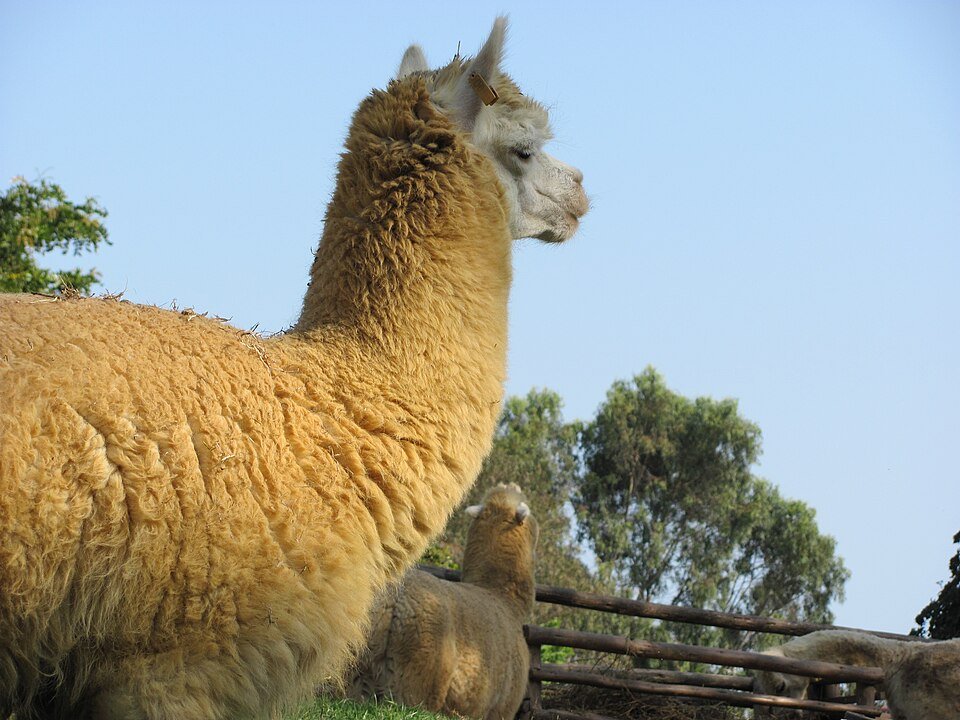
The farm's own husbandry information describes a breeding-herd system with access between stable and paddock, provision of water and shelter, and routine care. Those are the operator's descriptions, rather than findings from an independent inspection commissioned for this guide.
There is also a wider welfare question. The NSPCA's published position on petting farms criticises exploiting animals for entertainment and highlights concerns about stress, unsuitable confinement, inadequate shelter and insufficient supervision. Its position is general; it is not a named inspection finding about this farm.
For your own decision, ask whether animals can withdraw from visitors, how staff supervise interactions, and how they respond when an animal does not want to participate. An educational label alone does not answer those questions. This guide does not certify the venue as ethical, cruelty-free, a rescue centre or an accredited sanctuary.
Give children the option to observe. Keep them with a responsible adult, follow staff boundaries and use only feed specifically supplied and permitted by the farm. Do not chase, crowd or restrain an animal to obtain a photograph. A worthwhile visit does not require a close-up interaction.
Keep the plan realistic for your family
The farm currently publishes daily opening from 09:30 to 17:30, excluding 25 December. Confirm the last tour and any changes for your date. Closing time is not necessarily the time at which a full guided activity can begin.
Ask about the actual route and facilities if pushchair access, steps or another access requirement affects someone in the group. A walk with an animal and a visit to a shop involve different demands. Agree on a non-participating option before booking rather than expecting everyone to complete the same activity.
Use a coffee or meal break to give the visit some breathing space, while checking the current menu and dietary arrangements directly. Leave room for a shorter visit if children lose interest or the available activities differ from your expectations.
For a separate Cape Peninsula stay, Aqua Terra welcomes guests aged 12 and older. If everyone in your party meets that minimum, check Aqua Terra availability in Simon's Town. Keep the Paarl journey and farm activities as their own confirmed arrangements.
Research by Aqua Terra on 2 November 2026. Farm and NSPCA information rechecked on 3 November 2026. Confirm visitor details directly; published offerings do not establish current animal conditions or independent welfare approval.
Further Reading
Golden Gate and Drakensberg: Planning a Two-Base Trip
Tue November 3, 2026
Read This Article
Basotho Cultural Village: Planning a Guided Visit
Tue November 3, 2026
Read This Article
Plan a Basotho Cultural Village museum visit with a guide, distinguish specialist trails from the rest camp, and confirm the programme for your date.
Clarens Rafting Holiday: Planning an Ash River Outing
Tue November 3, 2026
Read This Article
Fit a guided Ash River outing into a Clarens weekend, comparing half-day and full-day packages, transfers, participant requirements and current operation.


Share This Post