


Compare Sevilla, Stadsaal and Truitjieskraal for a Cederberg rock-art trip, with walking expectations, permits and essential road-access checks.
A History-Focused Day at Kimberley's Big Hole
Posted on Mon November 2, 2026.
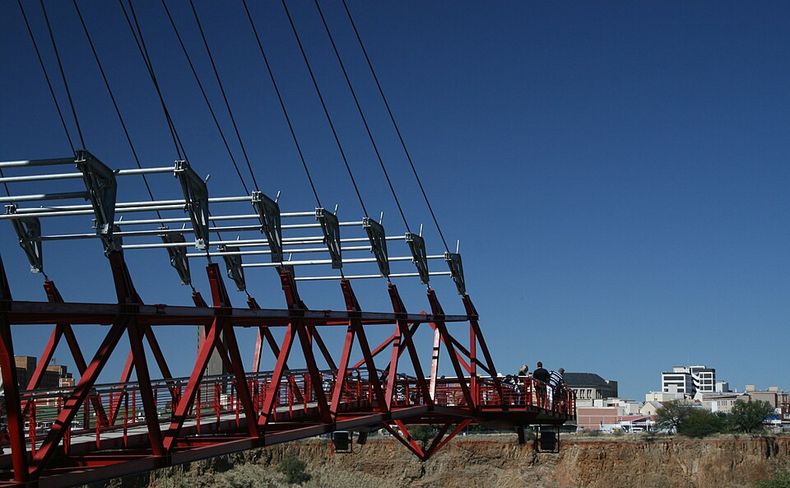
Connect Kimberley's Big Hole with its museum, Old Town and mining labour history, with practical guidance for planning a thoughtful visit.
A history-focused day at Kimberley's Big Hole works best when you connect the view of the excavation with the visitor centre, museum and Old Town. The pit explains the scale of extraction; the surrounding interpretation helps you consider the work, technology, money and unequal power behind it.
Plan around a guided departure, then leave time to explore the historical buildings rather than arriving only for a photograph. You do not need to fill an entire day with scheduled attractions: a substantial museum visit, a meal break and time to absorb what you have seen can make a more useful history stop than several rushed admissions.
Start with the visitor centre and a confirmed tour time
The museum's official visitor information lists guided tours from 09:00, hourly through 16:00, with times subject to change. It asks visitors to allow ten minutes to buy tickets before departure. Individuals and families do not need advance bookings under the published arrangements; groups of twenty or more should contact the museum.
Confirm the current timetable before building a driving day around the final departure. The site's opening hours and the time of the last guided experience are different planning details. If you want a particular part of the visit, ask whether it is included and operating, rather than assuming admission covers every attraction shown in photographs.
For the day itself, aim to arrive with time to orientate yourself, use the facilities and ask about the sequence. A guided introduction can make later independent browsing more purposeful: note which historical questions you want to revisit in the exhibitions or Old Town.
See the excavation as a place where people worked
The Big Hole operator's site presents the mine and visitor experience as the starting point for understanding Kimberley's diamond history. From the viewing area, consider the physical task of removing material, moving it and extracting the diamonds. The scale is easier to grasp when you connect the view with the tools and processes described inside.
Keep the viewing experience separate from the underground interpretation. A local visitor guide from The Solomon describes the latter as a replica mine experience. It is not permission to enter historic workings or explore the excavation yourself. Ask museum staff which elements form part of your tour and follow their visitor boundaries.
If anyone in your party dislikes heights, enclosed spaces or a particular presentation format, ask for specific details before buying the relevant ticket. The operator describes the facility as wheelchair friendly, but visitors with mobility needs should confirm the actual route, lift arrangements and access to the parts they want to see.
Follow the story from individual claims to company control
A useful historical thread is the change from many small claims to an industry dominated by larger companies. In Emilia Potenza's historical account, hosted by South African History Online, the cost and difficulty of deeper mining help explain why smaller owners lost ground to larger businesses.
Use the displays to follow that change. What machinery and finance did deeper operations require? Who controlled access to the valuable ground? How did mining alter the settlement around it? Those questions can connect an impressive piece of equipment or an old company name with the wider story.
The labour history deserves equal attention. Potenza's account describes the closed compounds used to control African mineworkers, restricting their movement during contracts. This was a system of confinement and racial inequality, not simply another accommodation style in a prosperous Victorian town.
When looking at photographs, buildings and personal objects, ask whose experience is represented. A director's railway coach and a worker's sleeping arrangements tell different stories about the same industry. Keep both in mind rather than allowing the fortunes of a few famous businessmen to stand for everybody who lived and worked here.
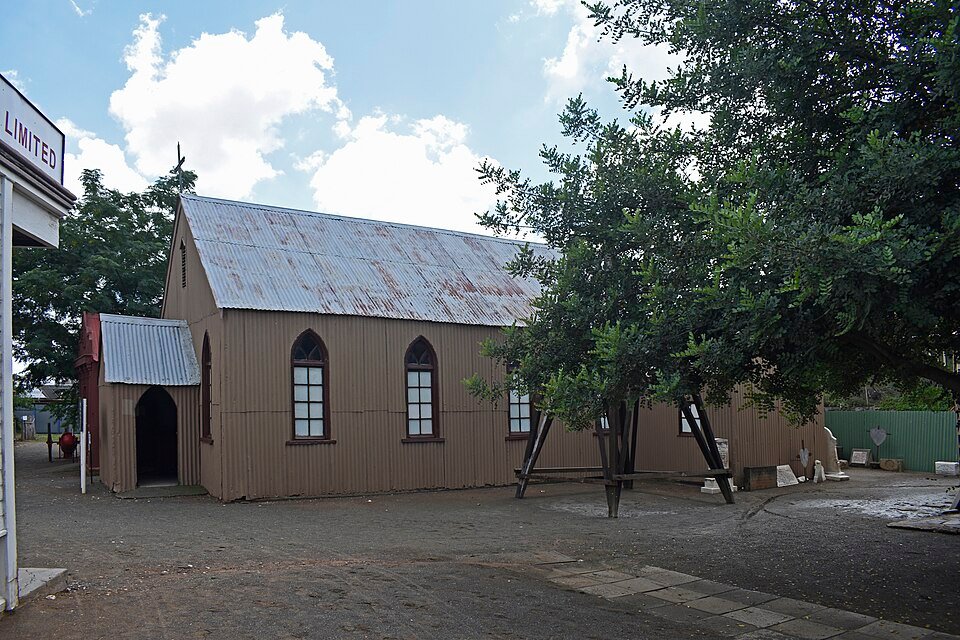
The historic German Lutheran church of St Martin at the Big Hole open-air museum, photographed in April 2025 by Ymblanter, CC BY-SA 4.0. An archival exterior view, not confirmation that every building is currently open. Unmodified web reproduction.
Give the Old Town a separate part of the visit
The operator describes period buildings preserved or restored within the Old Town, including the church, diggers' accommodation and the De Beers railway coach. Treat this as a curated museum setting. It brings selected buildings and objects together to interpret an era; it is not an untouched street where every structure necessarily remained in its original position.
Choose a few details to examine closely. Compare a domestic interior with a commercial building, or look at the transport objects after considering how people and goods reached a mining town. Reading a label carefully and discussing one object can be more rewarding than walking past every frontage.
The Solomon's local guide notes that heritage tram services have operated intermittently. Confirm directly if a ride matters to your visit. A tram in an exhibition photograph or parked on site does not establish that a passenger service will run that day.
Keep the practical arrangements simple
The official visitor page publishes fees dated March 2026. Use the current museum page or contact the museum for your party's applicable price, concessions and inclusions. Older directory prices remain searchable, so check the source and date before budgeting.
Allow space between the guided experience, independent browsing and your onward plans. If travelling with children, agree on two or three things to look for, such as a mining tool, a period building and a transport exhibit. Let their interest determine whether to spend longer, rather than promising that every display will suit every age.
Before leaving, return to the view in your mind: what did the excavation require, who benefited, and whose labour made it possible? That connection between landscape and social history is what turns the Big Hole into a meaningful Kimberley visit.
If your broader South African holiday continues to Cape Town, plan a separate Cape Peninsula stage for coastal scenery and Boulders Beach, and check Aqua Terra availability in Simon's Town. Aqua Terra welcomes guests aged 12 and older.
Featured photograph: observation deck at Kimberley's Big Hole, September 2009, by NJR ZA, CC BY-SA 3.0. Archival view, not a current access or facility-condition report. Featured image resized and cropped for website display. Research and editorial review: Aqua Terra, 2 November 2026.
Further Reading
Cederberg Rock Art Without Long Hikes: Sevilla and Stadsaal
Mon November 2, 2026
Read This Article
Coffee Bay, Morgan Bay or Chintsa for a Family Holiday?
Mon November 2, 2026
Read This Article
Compare Coffee Bay, Morgan Bay and Chintsa for a family holiday, including arrival plans, accommodation, beach access and what to check before booking.
Can You Visit the Drakensberg Without Hiring a Car?
Mon November 2, 2026
Read This Article
Plan a Drakensberg holiday without a rental car: arrange arrival transfers, trailhead transport, guided outings and your return journey.



Share This Post