


Compare Sevilla, Stadsaal and Truitjieskraal for a Cederberg rock-art trip, with walking expectations, permits and essential road-access checks.
Is Kgalagadi Too Hot in Summer? A Practical Trip Guide
Posted on Mon November 2, 2026.
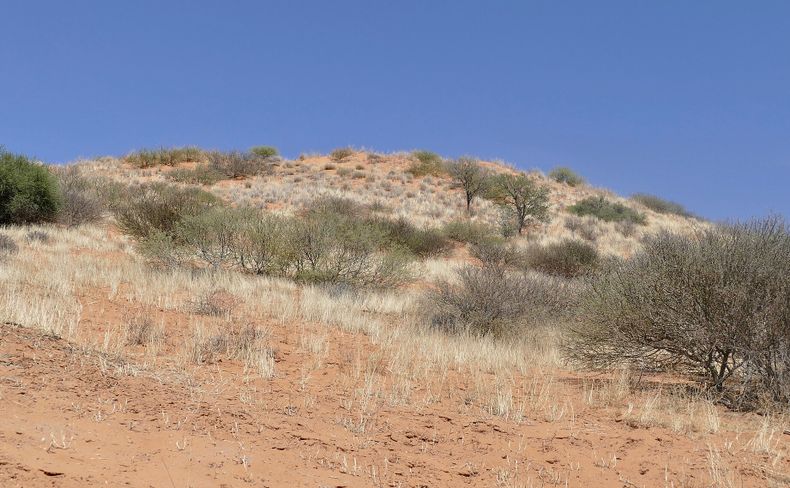
Planning Kgalagadi in the hotter months? Understand summer heat, irregular rain, accommodation choices, driving distances and supplies before booking.
Kgalagadi can be intensely hot in summer, so the right question is whether you want a holiday organised around the heat. If cooler days and long, comfortable drives matter most, choose another season. If summer is your available window, favour manageable distances, carefully chosen accommodation and flexibility over a packed camp-hopping itinerary.
The park's red dunes and open landscapes do not disappear in summer, and rain can bring dramatic skies. But a photograph of a storm does not tell you how comfortable the next afternoon will feel. Plan for the conditions, not just the scenery.
How hot is summer in Kgalagadi?
SANParks' climate information describes summer temperatures reaching 42 degrees Celsius in the shade. This is an indication of possible extreme conditions, not a promise that every summer day reaches that temperature. A monthly climate description also cannot replace the forecast for your travel dates.
The same source places the main rainy period between January and April, peaking in March, while emphasising that rainfall is irregular. Summer should not be treated as either reliably rain-free or dependably cooled by afternoon showers.
Check the park's current weather page before departure and refresh the forecast during the trip when possible. Build a plan that remains workable if a day is hotter than you expected.
Choose your accommodation for the afternoons too
In cooler weather, you may mainly compare camps by location and the drives around them. In summer, where you spend the middle of the day deserves equal attention. Ask about the exact unit's cooling, shade, electricity arrangements and food storage before booking.
SANParks' park overview lists a shop, fuel, restaurant, information centre and pool at Twee Rivieren. Those facilities make it worth comparing when you want more services close by. They do not establish that every unit has identical cooling or that every facility will be available throughout your stay.
A remote wilderness camp can be appealing, but compare the practical trade-off rather than treating remoteness as an automatic upgrade. The park's vital information says wilderness camps do not supply potable water and identifies several unfenced camps with additional access or age conditions. Check the rules for your actual booking.
Keep the first driving day realistic
Arriving at the entrance is not the end of the journey if your first bed is much farther inside. The SANParks travel-time table allows four and a half hours from Twee Rivieren to Nossob and three and a half hours to Mata-Mata. Use the park's current advice to plan your actual route and allow for your stops.
That is a strong reason to avoid combining a long approach drive with an ambitious first afternoon inside the park. A simpler arrival, followed by a settled first night, leaves fewer moving parts when you are learning how the roads and camp arrangements work.
The park's road-access guidance warns that internal roads are gravel, that conditions can be difficult for sedans and that some roads may become inaccessible when wet. Choose a vehicle for the booked route and current conditions, not just for the distance on a map.
Give the day a deliberate shape
Where the permitted times and conditions allow, consider a shorter morning outing, time back at camp, and another outing later if it still suits your group. This is a planning pattern, not a guarantee of cool weather or a recommended timetable for every day.
Confirm the applicable gate and camp times at reception. Different gates and arrangements appear on the park's information pages, so do not copy a time for a different entrance or assume that sunset overrides the rules.
Choose the return point before extending a drive for another sighting. Leave enough time to get back within the required hours. A holiday with fewer camp moves can give you more flexibility than one where you must cover a long distance every day.
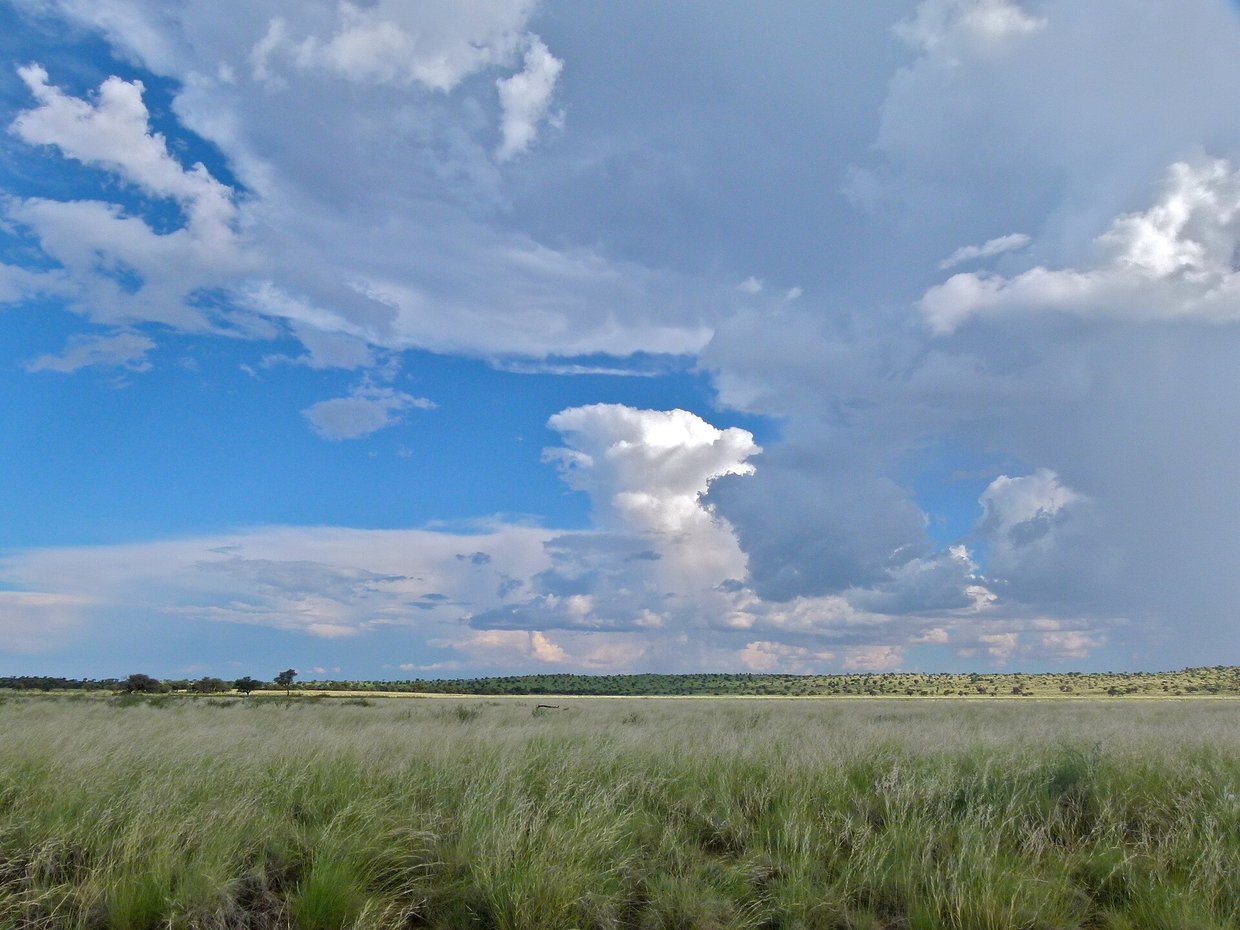
Storm clouds over the Nossob riverbed in Kgalagadi, photographed in February 2012 by Bernard DUPONT, CC BY-SA 2.0. Resized for web display. Historical landscape photograph, not a current weather report.
Water, supplies and vehicle preparation are part of the itinerary
SANParks' visitor tips advise keeping an emergency supply of 10 litres of water in the vehicle. That emergency reserve is separate from planning your ordinary drinking, cooking and camp needs. Arrange supplies for your actual group and route before setting out.
The same guidance advises remaining in the vehicle after a breakdown and carrying a torch or headlamp because outdoor camp lighting is limited. Read the park's current instructions before arrival and ask reception how to obtain assistance on your planned route.
Check the vehicle, spare-wheel arrangements and fuel plan before entering the park. Pack sun protection, suitable clothing and shoes, and keep essential items easy to reach. These are practical trip preparations; any personal medical questions about heat should be discussed with a qualified health professional before travel.
What should you expect from wildlife viewing?
Make the landscape and the time spent observing part of the reason to visit. Do not choose summer because somebody has promised a particular predator sighting or a reliable scene at a waterhole. Rain, temperature and individual animal movements can all change the day you actually experience.
Ask park staff about current roads and suitable viewing plans, and treat their advice as a starting point for a flexible outing. A shorter drive you enjoy is a better holiday decision than an exhausting loop undertaken to match someone else's trip report.
Should you choose summer or change the dates?
Choose cooler dates if heat is likely to dominate your enjoyment, especially when your preferred accommodation offers little respite. If summer is fixed, book the trip you can comfortably manage: fewer transfers, suitable facilities, reliable supplies and room to change the day's plan.
For a wider South African itinerary, our self-drive planning guide covers general car-hire and road-trip considerations. If your holiday also includes a separate Cape Peninsula stay, check Aqua Terra's rates and availability in Simon's Town.
Featured photograph: red dune beside the Auob riverbed south of Mata-Mata by Bernard DUPONT, CC BY-SA 2.0. Resized and cropped for website display. Research and editorial review: Aqua Terra, 2 November 2026.
Further Reading
Cederberg Rock Art Without Long Hikes: Sevilla and Stadsaal
Mon November 2, 2026
Read This Article
Coffee Bay, Morgan Bay or Chintsa for a Family Holiday?
Mon November 2, 2026
Read This Article
Compare Coffee Bay, Morgan Bay and Chintsa for a family holiday, including arrival plans, accommodation, beach access and what to check before booking.
Can You Visit the Drakensberg Without Hiring a Car?
Mon November 2, 2026
Read This Article
Plan a Drakensberg holiday without a rental car: arrange arrival transfers, trailhead transport, guided outings and your return journey.


Share This Post